He Read Malagasy Before German — Here's What Happened Next
Updated: Sep 13
Raising Bilingual Malagasy Children: Reading Malagasy Before German
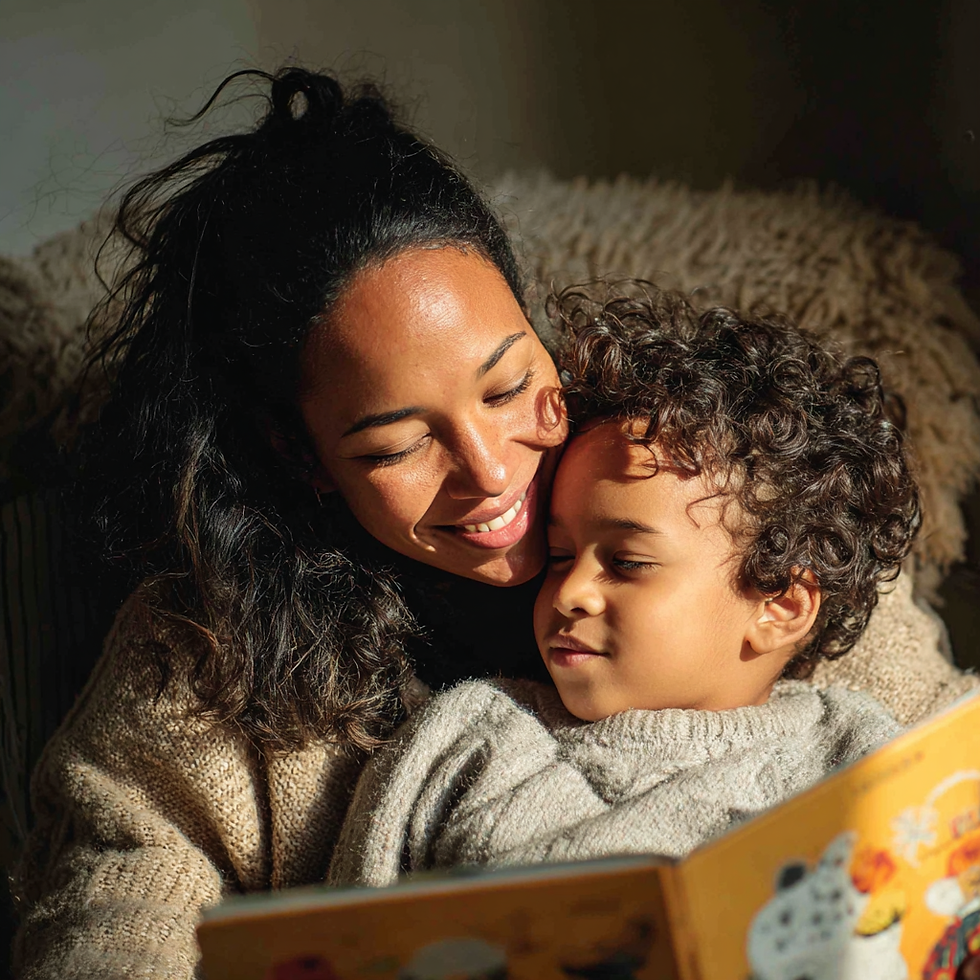
My little boy was 2.5 when he started pointing at things and asking what the letters said. Not yet in Vorschule — not even close. His Kita wouldn't touch reading for another three years. But there he was, wanting to know.
I'd followed an online Montessori seminar a while before that, and one idea from it had stayed lodged in my head: children go through a sensitive period for reading — a window where the interest is wide open on its own, and if you catch it, the learning happens almost effortlessly. Miss it, and you're pushing instead of following.
So when I saw that interest in him, I didn't want to wait for Vorschule to "officially" allow it.
I went looking for how to actually do this the right way, and found my way to Céline Alvarez's work — her research using Montessori principles to teach French-speaking children to read. It wasn't built for Malagasy. But the method didn't have to be French to work; it just had to start with sounds. So I adapted it. We started with simple sounds — not letters, not spelling, just sounds. Before he could really use word cards, we played first-sound games constantly: what sound does this word start with, can you find it, can you say it. That became Litera Voalohany — the first-sound game I made because that's genuinely where the method starts, before a child is ready for whole words. Once that clicked, I made him the next step: cards with short Malagasy words, two to five letters, simple enough for a beginner to connect a sound to a whole word.
That's how Mandrindra Litera was born — not as a product first, but as the natural next step after the first-sound games at our kitchen table, made because the method his Kita would eventually use didn't exist yet in our language.
And somewhere in the back of my mind, the whole time, was a quieter worry I never said out loud:
Is this going to slow him down in German?
Here's the thing nobody told me. It didn't.
If anything, it was the opposite. He already knew that letters carry sounds, that sounds build words, that words carry meaning — the actual mechanics of reading were already his. German just needed him to point that same skill somewhere new. He wasn't starting from zero. He was building on ground he'd already tested.
I think about this a lot, because it runs against almost everything I was quietly afraid of when I started. There's a pressure, in this community, to make sure our kids are "ready" for the country we're raising them in — ready for German, ready for Vorschule, ready to not stand out. And it's easy to read that as: German first, everything else later, if there's time.
But what if it doesn't have to be a trade-off?
Not first this, then that. Not one language at the cost of the other. Just roots — going down before anything grows up.
My son didn't fall behind by learning to read in Malagasy before Vorschule said he was allowed to. He caught a window that was already open, and it happened to open in his own language first.
This is exactly the feeling Mandrindra Litera came from — not a workbook, not a "get ahead" tool, just the natural next step after the first-sound games at our kitchen table, because I didn't want to wait for a system to catch up to what he was already ready for.
If your little one is starting to notice letters — even before Vorschule says it's time — you can start where we did: Litera Voalohany (free) for first-sound play, then Mandrindra Litera once they're ready for whole words.
If you want more of these moments as they happen — not just the ones that make it to the blog — I share them first on Instagram @Lohasola and @busymama.lohasola. Come find me there.
I'd love to know: what language did your child learn to read in first — and did anything surprise you about how it went? Tell me in a DM, or tag another Malagasy-in-Germany mom who's wondering the same thing. ❤️

Comments